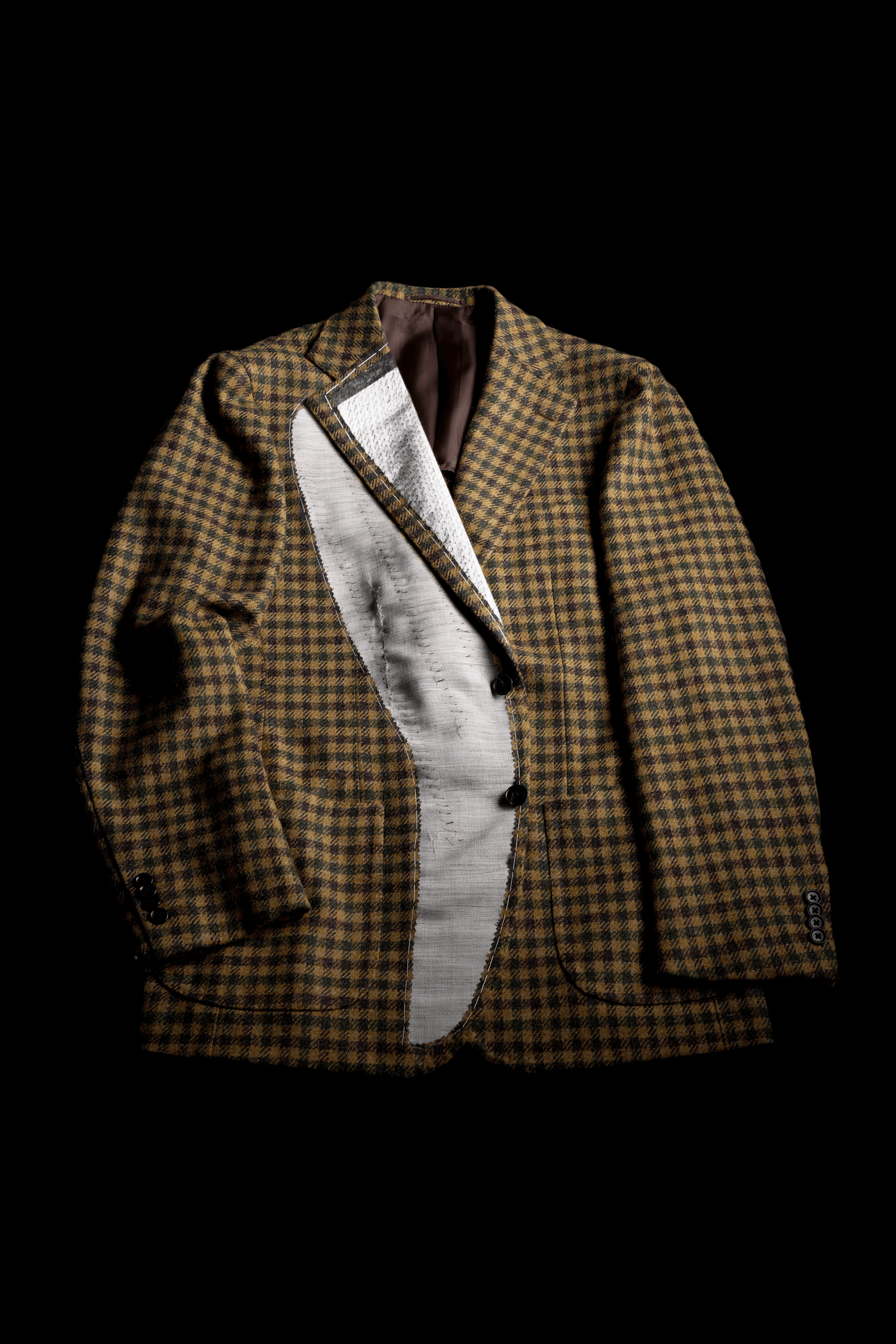
What is the construction of a Cavour Suit?
15 September 20263 min read
Author: Stian Hasselö Kline
For tailors, seamsters, and hobby sewists the world over, there is one garment that will always be their white whale. The garment that proves you have become a master. The one thing even professionals will sometimes refrain from attempting due to its complexity and the technique required.
The suit.
The suit, or more specifically the suit coat, is a complicated garment due to its precise shaping and strict tailoring rules. It is a construction that has been honed over centuries—350–400 years, to be more exact—and has grown from a necessity of dressing into an art. For any of our beloved customers or potential buyers, this is a short guide to how Cavour’s suits are constructed, with a focus on the craft and tradition that have made the suit what it is today.
The suit.
The suit, or more specifically the suit coat, is a complicated garment due to its precise shaping and strict tailoring rules. It is a construction that has been honed over centuries—350–400 years, to be more exact—and has grown from a necessity of dressing into an art. For any of our beloved customers or potential buyers, this is a short guide to how Cavour’s suits are constructed, with a focus on the craft and tradition that have made the suit what it is today.
Every Cavour suit is sewn with a lightweight, full-floating canvas. This canvas is what gives the coat its shape and is one of the things that separates us from other brands. What is a canvas, you may ask? The canvas is like the skeleton of the suit. Our canvas is made of wool and horsehair, which gives it the required stiffness. Canvas is what gives the suit shape, drape, and the ability to conform to the body.
Our full-canvas construction extends throughout the length of the torso and is placed inside the coat and sewn into it by hand. This allows the garment to move freely, offering comfort and mobility. Not only is this old-world tradition better for the look and feel of the suit, but because it moves with the wearer rather than against them, it minimizes stress on the fabric, which means it will last longer. Proper canvassing will also shape itself to the wearer’s individual form, making the suit look better and feel better over time.
This is the one detail that turns it from a coat into your coat.
This is the one detail that turns it from a coat into your coat.
Cavour’s suits and coats are inspired by the Neapolitan tradition. This means, among other things, soft tailoring. Aside from the aforementioned lightweight canvas, we also use a soft, natural shoulder. As opposed to the traditional suits most men are used to, a Cavour suit has almost no padding in the shoulder. The Italians call this spalla camicia, which translates literally to “shirt shoulder.”
Spalla camicia contributes to the comfort of our coats and, together with our higher armhole, provides an increased ease of movement. Each sleeve is cut larger around than the armhole itself, allowing for this movement, and is carefully inserted into the sleeve head by hand. With no padding or roping—the extra fabric gathered inside the sleeve head to make it look smooth and shapely—one might notice small puckering or pleats at the shoulder.
This wrinkle, or grinze in Italian, is a characteristic feature of the style and proof that it has been executed by hand by a skilled tailor. We believe this shoulder style keeps the suit from appearing too stiff or overly stodgy. We believe in a relaxed elegance, and this is perhaps most evident in our use of spalla camicia on our coats.
Spalla camicia contributes to the comfort of our coats and, together with our higher armhole, provides an increased ease of movement. Each sleeve is cut larger around than the armhole itself, allowing for this movement, and is carefully inserted into the sleeve head by hand. With no padding or roping—the extra fabric gathered inside the sleeve head to make it look smooth and shapely—one might notice small puckering or pleats at the shoulder.
This wrinkle, or grinze in Italian, is a characteristic feature of the style and proof that it has been executed by hand by a skilled tailor. We believe this shoulder style keeps the suit from appearing too stiff or overly stodgy. We believe in a relaxed elegance, and this is perhaps most evident in our use of spalla camicia on our coats.
In the classic Neapolitan style, we offer a higher gorge. The gorge is where the collar attaches to the lapel, commonly known as the notch. This higher gorge, along with the slightly lower button stance, creates long visual lines that can make the lucky man in our suit look taller and slimmer.
While we do still produce an ready-to-wear product, many of the suit’s details are sewn by hand. This includes the collar attachment, sleeve attachment, lining, pick stitching, and buttonholes, as well as the bar tacks on our trousers.
While we do still produce an ready-to-wear product, many of the suit’s details are sewn by hand. This includes the collar attachment, sleeve attachment, lining, pick stitching, and buttonholes, as well as the bar tacks on our trousers.
"This isn’t the forum to go through the roughly 200 steps, give or take, it takes to sew a suit, or the 80 hours of labour necessary to do it right. But hopefully, it gives a small insight into what makes Cavour special."
We strive to offer everyone who comes through our doors a taste of the tradition, the craft, and the luxury that connects us all to the generations that came before us through this one glorious sartorial expression.
Whether for work or for leisure, a wedding or a funeral, there is but one garment that will never let you down. It is among the only elements of fashion that has remained almost unchanged over the last 170 years, and we would bet it remains that way for at least another hundred.
Perhaps the suit is proof that humanity can, indeed, reach perfection.
Whether for work or for leisure, a wedding or a funeral, there is but one garment that will never let you down. It is among the only elements of fashion that has remained almost unchanged over the last 170 years, and we would bet it remains that way for at least another hundred.
Perhaps the suit is proof that humanity can, indeed, reach perfection.